
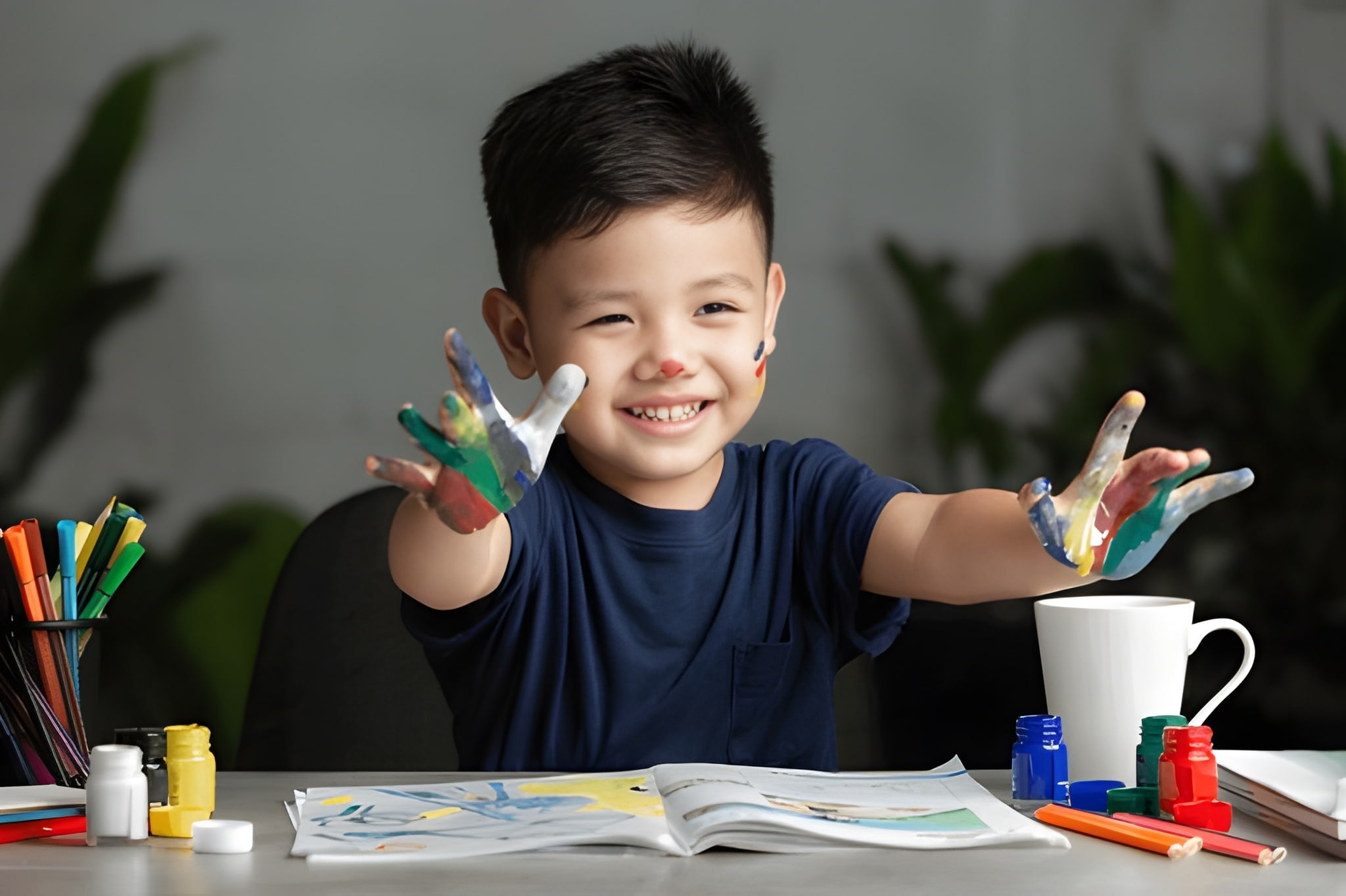
At a time when education is often centered on testing, grading, and structured routines, creativity can sometimes fall by the wayside. Ironically, creativity is among the most indispensable skills for a child; it is the root of imagination, innovation, and problem-solving, ensuring that children thrive amid a changing world. Natural creativity is the inherent trait of a child’s thought; in their natural state, kids are gifted thinkers will minds that question, explore, and anticipate boundless possibilities.
When Endless creativity is incorporate into a child’s daily learning routine, it reframes how a child interacts with information and who a child believes they are as a learner. When creativity is insert into education every day, it does not only improve a child’s likelihood of academic achievement but instills emotional intelligence and resilience, and spontaneous delight in a child’s learning journey. Why should science be a part of a child’s daily learning and how this routine can cultivate a child’s creative and inquisitive as well as clever mind.

Encourage a Love for Learning
Creativity adds a sense of thrill and joy to everything we do and learn. If everything is a story, children will be more excited to listen to it. Instead of forcing them to pursue something they consider tedious, it starts to influence them on the contrary – they want to. Creativity in learning does not have to follow a clear path; one’s inquisitiveness is enough to propel them to engage in a scholarly activity. Corporations, in collaboration with schools, can transform all learning from straight memorization into thrilling discovery tours. Parents and teachers can make this passion their children ‘daily through making them engage in creative curiosity at whatever level.
Building Self-Expression and Confidence
As humans, we all have an exceptional way of saying how we feel and what we want. While some people may utilize terms, everyone requires a kind of creative and undivided idiom. The earliest method of diverting knowledge is a realm at which one’s absolute darkest hours mix in silence and gasps of articulation. Each kid requires making an idea on the realm, whether through drawing, music, or construction. Because of the energy of expression, many children start to nurture while studying added to an angle of high self-esteem; it allows everyone a tone. Indulge kids with creative parents in education and learning materials and young people more self-confident and lead the globe to our unique imaginative revolution.
Emotional Intelligence Boost
Another critical reason to build students’ creativity is that it is closely connected with emotional intelligence. With the help of creative projects, children learn how to understand their feelings, control their emotions, empathize with others, and gain knowledge about human nature. They can write stories to express their emotions, create art to understand them, or dramatize to look at the situation from another perspective. Emotional intelligence impacts how people communicate, form relationships, and even cope with problems, as it helps to be patient, control behavior and emotions, and neutralize stress. If creativity is a daily practice, such as journaling, storytelling, or art, it creates a safe space for the expression of feelings. Children learn how to use their creativity to feel more empathic, resilient, and more balanced emotionally. Obviously, it directly promotes the happiness of a person and his academic achievements.
You May Also Enjoy:
How Robotics and Coding Prepare Kids for The Future
The Role of Hands on Learning in Kids Which Boosts Creativity
Building Confidence Through Learning New Skills
The Power of Positive Reinforcement In Kids’ Education
How Storytelling Improves Education Skills in Kids
Creative Thinking Stimulates Curiosity
One of the essential properties that a developed student gem should have is curiosity. Children who are taught to ask “why,” “how,” and “what if” do not consider learning as a monotonous procedure focused on gaining knowledge by a schedule or standard. In a creative classroom, teachers do not ask love questions to reward pupils or listen to their opinions. They make pupils think like this when they explain that the rationale for their question is one. A great example would be to consider a topic related to animals. Instead of telling children about the characteristics of animals, they can have one question: “How would you invent a new animal to help you survive in the desert?” Thus, curiosity and scientific thinking are supported by creativity and fun. It also encourages children to explore ideas, follow their interests, and strive for new experiences.

Boosting Memory and Learning Retention
Creativity also does wonders for children’s memories. Specifically, it makes their learning conversations or interactive lessons so memorable that the knowledge is retained. Creative activities prerecord new memories for more straightforward integration. For example, when children assume the roles of historical figures and perform key episodes in history or make up their bright jingles around the topic, they acquire two or more ways to reflect on the same event as historically important or content packed with memories. When children prepare various models and diagrams using creativity, they get their tools that let free from their to use critical characteristics. When creativity becomes part of everyday learning, children no longer must remember – they understand. They can recall the information received from various experiences and apply it in new situations, achieving proper intellectual behavior. It boosts curiosity and supports academic performance.
Merge the Hybrid
Traditionally in education have you ever heard of integrating separate topics, such as math, science, art, or languages? Whatsoever, creativity explores connections between topics and reveal that knowledge isn’t by categories. Students must create vehicles that drive on solar energy and the car work in harmony with physics concepts, engineering reality, and consider design rules. For further into exploring what they have additionally, when students come back on the land expeditions as well, it’s easy bring home memories about languages, certificates of the explorer, and stories. Including creative combinations in activities daily, help the kids realize the world isn’t separate – it is a place where you nurture beautifully with your knowledge. Holistic learning helps students learn to work on integration faster and fin innovation easier in their jobs.

Reducing stress and building resilience.
Sometimes the anxiety and burnout of academically driven kids are hard not to notice. However, creativity is the best natural stress reliever. It acts as an emotional outlet that kids find easy and pleasant to use. Painting, crafting, and playing with life-size fantasy toys can help a child vent off his or her emotions in a non-harmful way. When kids create, their brains get the dopamine boost, which reduces their stress level. In addition, creativity teaches resilience. When your child sits over a drawing for hours just for it to fail in the end, they can handle it. They might feel disappointed, but they will certainly try again. This is an important emotional skill because when a child knows they can fail, they can take more risks to achieve the great results. Daily creativity in learning boosts kids’ emotional health while making them more emotionally strong and optimistic.
Final thoughts:
Creativity is not a nice addition — it is the very heart of meaningful learning. When children are allowed to imagine, explore, and create on a daily basis, they become more invested, confident, and competent thinkers. Education becomes more than just memorizing — it becomes discovering and enjoying new knowledge. Creativity enhances critical thinking, emotional intelligence, and collaboration, all while boosting curiosity and self-expression. Parents and teachers who incorporate daily creativity into children’s education inadvertently build well-rounded experts that are knowledgeable and innovative. In other words, creativity does not only prepare children for exams, it readies them for life. Creative thinkers will understand, helm, and inspire future generations in a world of constant transformation.