
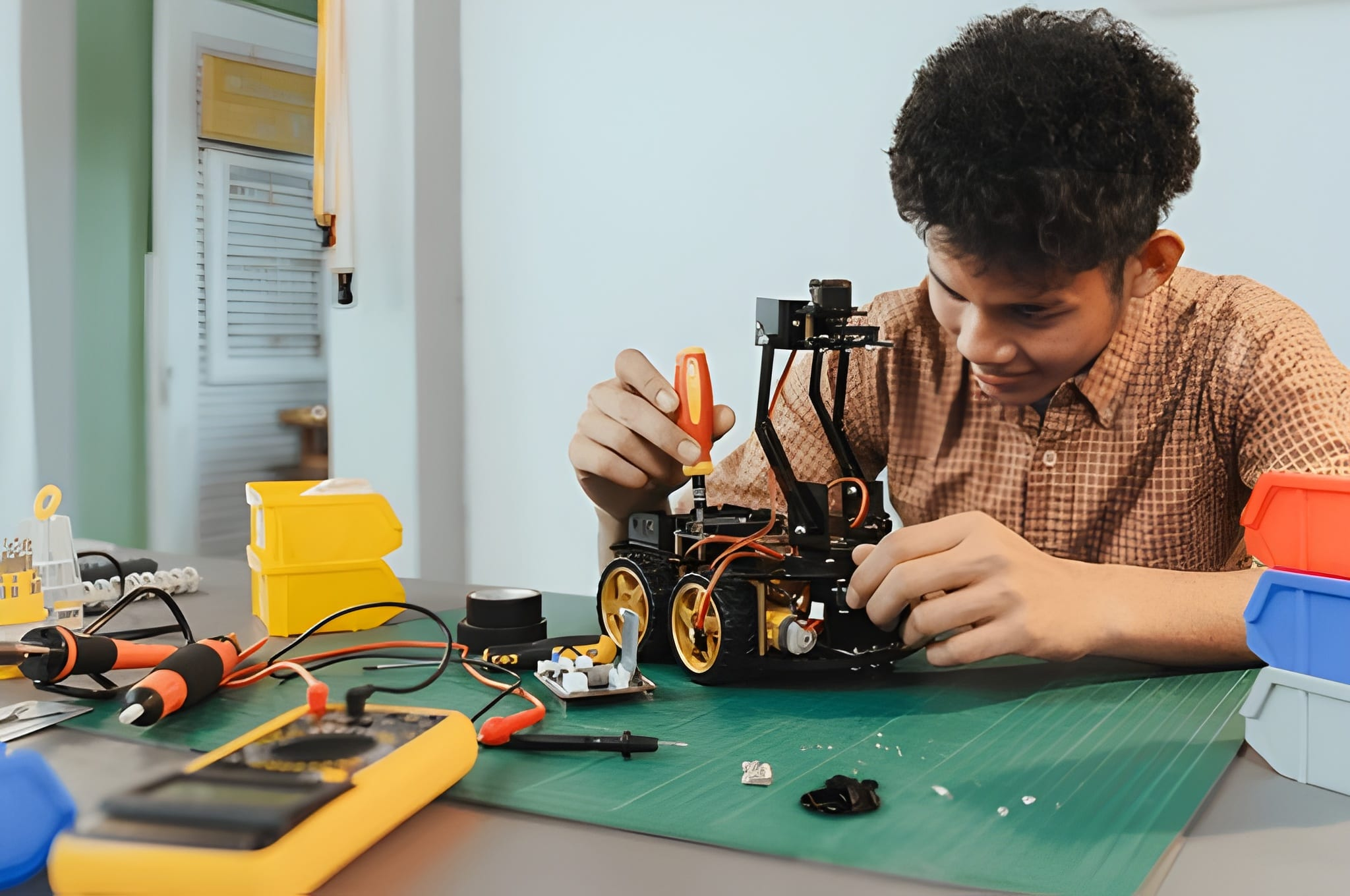
As we live in a world that has been evolving rapidly into a digital one, technology dominates virtually every track of our life. Virtually – from communication and learning to work and creation – understanding technology is not going to be merely an advantage – it will be a requisite for the next generation. And the understanding starts at the roots with robotics and coding – two seemingly expert’s skills that are transferring into the childhood learning category. Learning them from an early age provides the kids not only with technical knowledge and understanding but with the competences to think creatively, solve problems, and withstand failure – all of which will be and are very valuable in the future world of innovation and adaptation. Read how robotics and coding prepare kids for the future for the life of tomorrow and what parent and teacher should join their forces and start practicing it in daily learning.

Fostering Problem-Solving and Critical Thinking
Problem-solving is the core of robotics and coding. As they code or construct robots, children must engage in critical thought, action planning, and analysis when things do not go as intended. While coding with robots, kids will acquire crucial abilities such as examining and determining out why a robot is not transferring or what is causing a code mistake. This method of trial and mistake teaches both perseverance and analytic thought. Coding does not rely on memorization but rather on logic; it informs kids the rationale behind it and the brainpower of thought. In robotics, it is extended outside the digital space as data is connected to action. As problems arise throughout a robotics project, kids acquire patience, persistence, and a “we can do it” attitude – characteristics that will help them excel in all areas of study.
You May Also Enjoy:
Cozy Bedding Kids’ Essentials For a Better Night’s Sleep
Helping Kids Overcome Fear of Exams
Benefits of Roleplay and Drama in Early Eduation
Making Creativity a Part of Every Day Learning
Fun Ways To Make Kids’ Homework Time Easier
Enhanced Creativity and Imagination
Robotics and coding are not only technical, but they are also immensely creative. Coding provides children the freedom to convey their thoughts, from inventing a game to coding a robot to dancing to composing an interactive story. Building a robot implies immersing oneself in a part of creativity by combining engineering, design, and creativity. Children may build a robot that is programmed to do such things as pick up toys or recognize hidden objects, create a new invention that simply entertains them, or even create a robot that performs silly sounds. These creative activities help boost fantasy and bring art to a mix with innovation. Kids discover how science, technology, innovations, and mathematics, contribute meaningfully to society and why each sector is crucial.
Strengthen collaboration and Teamwork
Robotics and coding projects are group projects, whether it be in the classrooms, out of school clubs or competition-floor. The children learn critical interpersonal skills that they will transfer to the workplace. They learn to communicate, share ideas, allocate responsibilities, and listen to other people’s ideas. When one child designs the robot while another one is solely accountable for programming and the other for other strategies, the children learn the value of working collectively. They appreciate that no man is island, the importance of collective responsibility, and they get a sense of achievement that makes them human being, to begin with. The projects also been like to the real-life situation where most inventions and innovations are did by the pool of resourceful groups. Collaboration thus means more than coming together to get a job, but it means merging effort to solve a problem at hand creatively and effectively.
Develop Perseverance and Resilience
Undoubtedly, robotics and coding are challenging, and they offer the best place to fail and learn a valuable lesson. Most of their programs fail; the circuits crumble and the sensor failed to respond as per the standard. The students learn that falling is part of learning, and the best outcome and design are the outcomes of a series of fallings. Children develop a growth mindset that ultimately makes them more resilient, patient and focus. They start stumbling joyfully. They look at the problem curiously and request, “Why didn’t that job or how may I solve it?” Instead of immediately quitting. Resilience is one of the best life tools anyone can acquire in coding and robotics; kids learn grit and enthusiasm from the start that will enable them to overcome all odds.

Develops Logical and Analytical Thinking
Since coding and robotics require a step by step approach in writing code, playing with robots will make your child have better logical reasoning. Regardless of age, once a child is exposed to how to play with robots, they have to organize the information which is a basis of logical reasoning. Moreover, as a student interact with robots, he gains logical reasoning because, to play a robot, you have to understand how sensors, motors, and commands, work together.
These programs enhance your kid’s ability to analyze systems so that they can develop a pattern and make relevant logical decisions. It is all about how to think before deciding what to do, a skill required in mathematics, and other subjects that involves thinking. More so, it exposes your child to actual operations in the real world and how small procedures make up a big process. Code helps the kid form a discipline that he can apply in his future learning and daily life.
Confidence Through Achievement
Every successful coding program or robotic creation instills a child with confidence. They feel proud of themselves when they watch a robot move in the way they intended, or when a game runs smoothly. This achievement pushes the child to conquer more challenging creations. This confidence is not limited to robots or technology; it is based on the notion that children can master difficult tasks. Robotics and coding promote a “can do” philosophy; they learn to achieve a great deal with persistence and effort. This achievement enhances self-esteem and academics. Children gain enthusiasm for learning and desire to learn instead of seeing obstacles as intimidating. As a child’s confidence grows, so will his or her willingness to try something new.

Future Careers and Opportunities
The world is changing rapidly, and the jobs of tomorrow will necessitate a new set of talents. Robotics, coding, and technology literacy play an important ago in virtually every profession, including healthcare, engineering, design, and entertainment. Through this website, parents and educators instill in their children the notion that the work of the future is safe and that they will be ready for it. Children who learn to code today are getting ready to create data, but they’re also honing their problem-solving and analytical abilities — attributes that employers in every domain desire. Through robotics education, parents encourage children to consider STEM careers, engineering, automation, and artificial intelligence. Faced with this technological competition and a global economy, which thrives on innovation, makes a good first impression.
Final thought:
Preparing kids for a tech-fueled future. More than just the latest trends in education, robotics, and coding are among the few crucial tools to help build tomorrow’s thinkers, creators, and leaders to allow Children to explore these topics into exciting, rigorous, and creative experiences. It instills a sense of curiosity, sharpens their problem-solving skills, and helps them absorb the information. They get motivated and better their abilities, which lasts beyond the realm of technology. Considering that automation and machine learning are reshaping every perspective of our environment, the potential of having a fundamental understanding of and the skills to develop technology will help distinguish future achievements. Therefore, when we start empowering kids with robotics and coding today, we are not only preparing for future work but also empowering them to create and influence the future.