
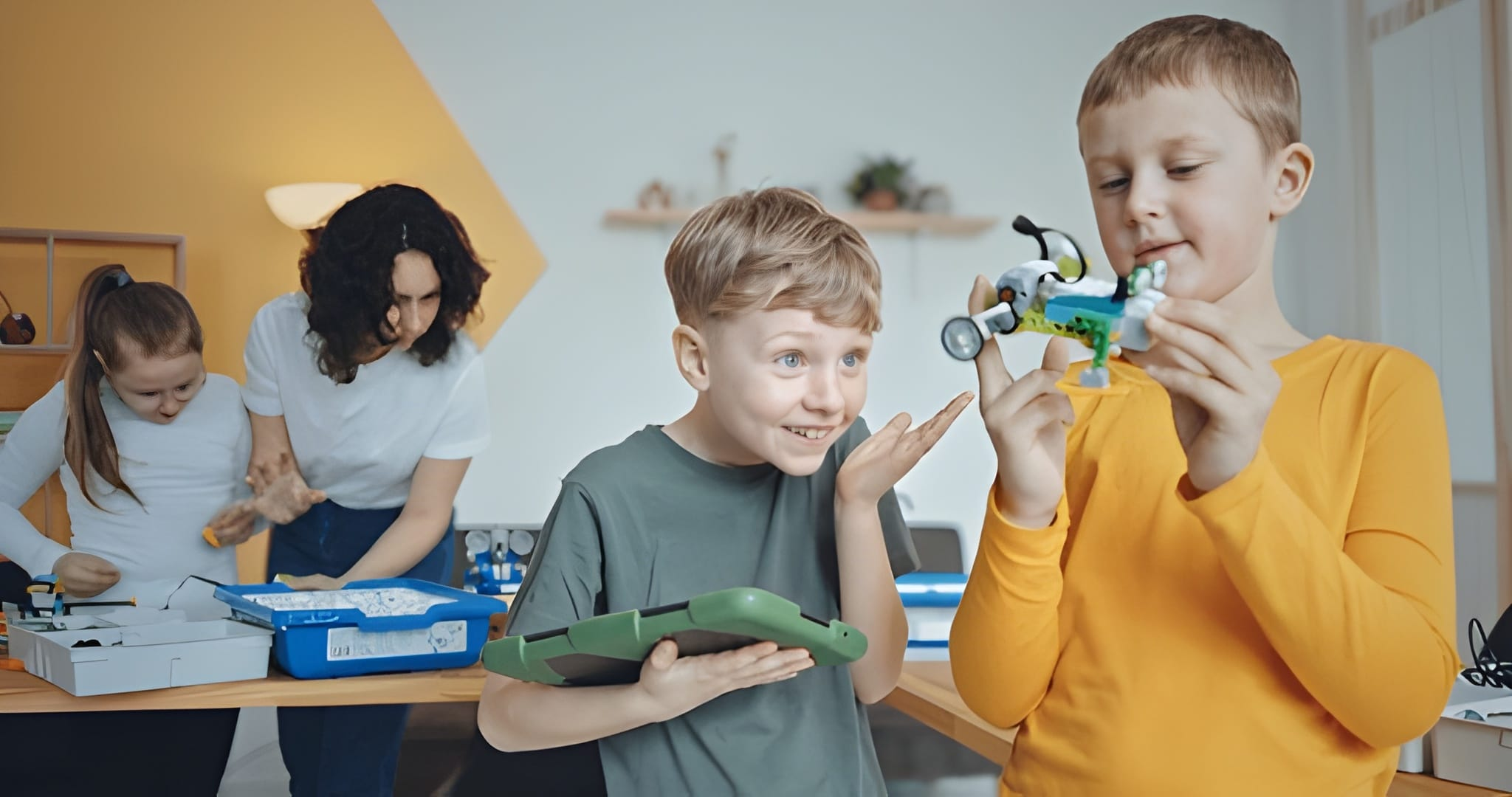
Confidence is one of the most vital qualities any child can acquire — it determines how they interact with themselves, face challenges, and explore their world. Though it is critical to encourage and back children, one of the most efficient ways to foster confidence in kids is by teaching them new skill. Everything a child learns, be it riding a bike, playing an instrument, evaluating meal recipes, or solving math problems, presents to the child that they can cultivate and expand their abilities through their effort and thorough determination. In other words, learning something new enhances children’s capabilities and confidence in themselves. The following essay discusses how learning teaches kids confidence while also cultivating their resilience and prime them for long-term success.

The relationship between learning and confidence :
Confidence is something that develops over time and is the result of working on and undertaking challenging tasks that children enjoy learning. The process by which children learn and grow through new skills sets of curiosity, discomfort, and eventual success is referred to as learning. For instance, learning how to tie shoelaces or bake cookie dough allows the child to observe how ability grows after practice. As a result, a child’s success accumulates in their confidence. Additionally, children’s success helps them to make mistakes and understand that mistakes can be made. When parents and educators remind children humans create mistakes, children start to link learning with more interpersonal connections rather than with the anxiety of failure, increasing a sense of enjoyment throughout their lifetime.
Growth Mindset: Role in Confidence
Growth mindset is the belief that one’s abilities can be develop over time through hard work and dedication. Children who realize that intelligence and talent are not fix characteristics become more willing to improve through learning. When kids hear, “I can get better through practice,” or “it’s okay to make mistakes; it will make me better and stronger,” they develop resilience and perseverance. Moreover, Parents and teachers can inculcate this mindset by praising not the outcome but the effort – “you put a lot of hard work into that puzzle,” not “you’re so smart.” Learning for children becomes an adventure, while confidence takes on new meaning; it is something they work for and earn. The more skills they learn and practice, the more assurance they develop that with practice and over time, they can do anything.
You May Also Enjoy:
Cozy Bedding Kids’ Essentials For a Better Night’s Sleep
Helping Kids Overcome Fear of Exams
Benefits of Roleplay and Drama in Early Eduation
Making Creativity a Part of Every Day Learning
Fun Ways To Make Kids’ Homework Time Easier
Small wins lead to major confidence
As previously said, confidence is the product of countless small triumphs. When children establish and meet small objectives, they create a foundation of self-assurance from which to work. For example, swimming a lap, completing a new book, or mastering a musical chord indicates to kids: “I can do this.” Parents and teachers assist them further by establishing realistic, achievable, step-by-step objectives and cheering their progress. This lets children see that every achievement is worthwhile and effort is important. Each success or achievement adds up and builds a sense of self-efficacy and determination.

Learning teaches patience and perseverance
Confidence is not just a matter of success; it also entails being able to push through and persevere. In addition, learning is teaching your child patience: becoming a master at a skill will take time! When a child becomes a beginner to a master at a musical instrument, constructing a LEGO model or completing a math equation, they quickly learn that repetition is key! Parents can reinforce this by emphasizing the child’s effort rather than the perfection. When a child discovers that they can do something challenging despite previous failures, the accomplishment stake quickly locks. Confidence is a significant part of this, and the kid learns that there is nothing scary about it when they try their hardest. Creative Activities 5. Creative Learning Encourages Confidence
Physical Skills and the Power of Movement
Sports, dance, martial arts, or swimming — these activities, in addition to being healthy, are useful for developing confidence since they link the learning process to action. For instance, mastering a physical skill requires coordination, focus, and repetition: all of which instill discipline, resilience. Regular physical activity releases endorphins, elevating mood and self-esteem. And probably the most crucial point is that when children score a goal or complete a race, they reach a concrete goal and see an immediate result of their efforts. In team sports, one can also learn how to cooperate with others and become a true leader. Children learn how to communicate with other players, rely on more trustful teammates, and handle both losing and winning properly. Thus, not only do children achieve physical strength, but emotional confidence, as they feel empowered to overcome obstacles and recover from any form of failure.

Encouraging Independence and Responsibility
Most learning is linked to independent work, and this is a critical element of confidence. When children are given opportunities to do things themselves, they learn to accept responsibility for their actions and their outcomes. Simple daily routines such as packing a school backpack, preparing a snack, or tidying their room also teach them a great sense of responsibility. It is important for parents to foster independence by giving their children choices and allowing them to make their own decisions, even if they are not the right ones. For example, you can let your daughter or son choose what to wear or plan a part of a family event. Each act of independence sends a message to the child that “you can do it your way.”
The Long-Term Impact of Skill-Based Confidence Confidence through learning new skills is not something that is easily lost – it is a personality trait that will affect every aspect of the child’s development in the long run. Children who believe in their ability to absorb information are more willing to take on challenges in school, more likely to try new hobbies, and more able to form healthy relationships.
As they grow, this attitude will result in better decision-making skills, a greater capacity for leadership, and an enhanced ability to adapt to any situation. Whether they are learning how to code, play an instrument, or cook, the process of skill acquisition will teach them self-control and resilience. These lessons will be the basis for emotional intelligence, academic achievement, and professional development in the future.
Final section:
Children are not born confident – their experiences, guided by trial and error, guide them to it. Skill acquisition is one of the activities that directly enable the psyche of a child. With each completed task, phobia faced, and talent discovered, they develop a spike in self-trust. As adults, whether we be teachers, parents or mentors, it is our job to maneuver them in this exploration by egging them to try again when failure halts their momentum. They should understand that growth is a result of trial and error, repeated risk-taking mentorship, and relentless exploration. From children, teens, to youth and finally young adults, developing confidence through new skills acquisition is more than just entailing academic experience- it’s the blueprint of self-trust to a promising future.