
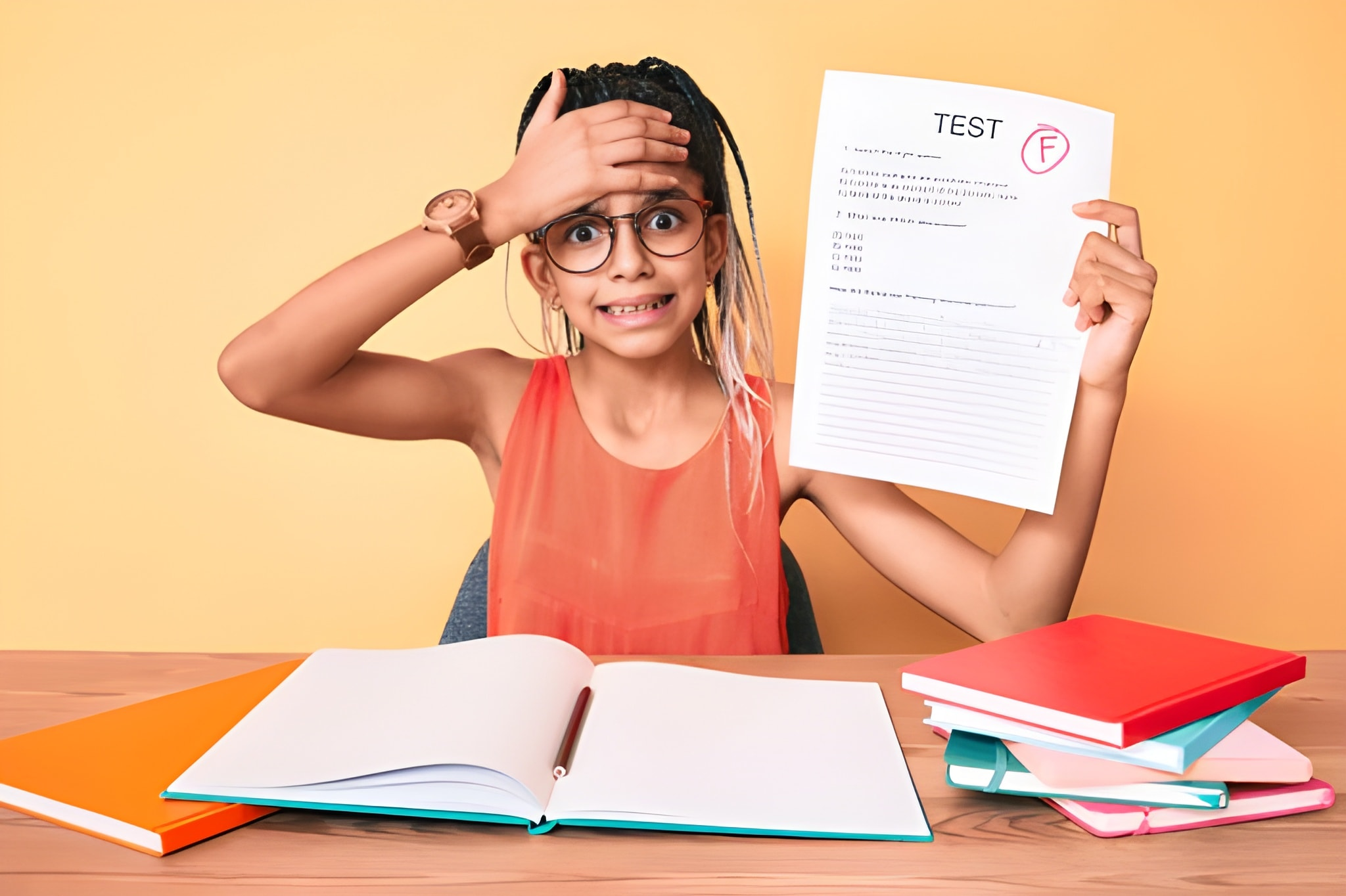
Exams and tests are among the most dreaded and stressful parts of school life for many children. Bright and capable students are often afraid of failing and disappointing their parents and teachers. While a little bit of fear is natural and can motivate kids to try their best, too much makes it hard for them to think straight, pay attention, and present what they have learned. Education science, psychology, practice, and parents’ experience agree: the sooner we understand and address children’s fear, the better. It is only by helping them change their mindset and attitude toward exams that we can ensure they see it as an opportunity to prove how much they have grown and achieved. This review will look at proven recommendations and the scientific and psychological foundations that helping kids overcome the fear of exams and tests to develop confidence, emotional resilience, and a healthy approach to learning.

Exam Fear in Children: What Is It?
Most children, however, experience so-called exam fear. It can manifest as stomachaches, restlessness, irritability, and even sleeplessness a few days or hours before an important test. Different children have different causes for their fear. Some are terrified of failing, others are anxious about their grades and parental reactions. Some may feel threatened and evaluated when compared to their peers, while others lack self-esteem when outshone by their classmates. The worst part is that many believe that if they fail these tests, they will lose the respect and love of their parents and teachers. Recognizing this anxiety is the first step for parents and teachers. They should remember that for children, these exams and tests are not just a means of evaluating their knowledge and skills. For many, it is the end of their life in a way, as the self-esteem of most children rests on their grades and the positive reinforcement they get or do not receive from their families. Thus, adults should approach their emotional insights with empathy and a desire to help and support, not additional pressure.
Help Kids Develop Good Study Habits
Sometimes, kids are just anxious because they don’t know how to study properly, or because they can’t see the fruits of their work. One should make use of studying habits and techniques that would ensure kids’ progress would be much more visible and fulfilling. Active study methods like summarizing notes, drafting flashcards and diagrams, or teaching others can help with this. Studying can be divided into meaningful “chapters,” after some of which kids can then enjoy fruits of their labor. Parents could help by making tests more of a game or a little less formal. When kids see that studying is not only a dry activity but also a fun experience, they stop being afraid of it.
You May Also Enjoy:
How To Introduce Coding to Kids
The Importance of Emotional Intelligence in Kids’ Education
How To Encourage Problem Solving Skills in Children
10 Must Have Travel Essentials For Families With Kids
Educational Kids’ Toys That Boost Creativity and Learning
Normalize Mistakes, Teach Kids to Be Resilient
Many kids are afraid of exams because they make so many stupid mistakes. The concept of a mistake is fundamentally tied with failing in their mind, and faili9ing them just equals disappointing teachers and parents. If failing is acceptable and acceptable, they are also less afraid of their skills. Mistakes should be common. Parents and teachers have their own mistakes that they could share, and they could make a point of reinforcing the fact that everyone makes mistakes. After a mistake, people pick up and keep going, that’s what’s important. The effort is more important than the result. When kids realize that it is not the end of the world to not know something, they are less afraid of studying.

Practicing with Mock Tests and Familiar Environments
Fear often stems from the unknown. Allowing children to have exposure to test-like conditions ahead of time will help reduce uncertainty. Instead of assisting the student in studying, mock tests likewise simulate the test’s setting, allowing the student to become acclimated with timing, style, and expectations. Teachers can create informal quizzes, and parents can develop tiny occasions at home. When children know what to expect, they feel more in control during the actual examination. Testing gradually becomes more typical rather intimidating. A sense of familiarity develops self-assurance while reducing anxiety and allowing children to concentrate on understanding what they know rather than the act of studying itself.
Encouraging Balanced Routines
During Exam Season During test periods, children quickly lose balance – pulling all-nighters, omitting meals, and forgetting to play. However, maintaining a healthy schedule is essential for minimizing stress. Children should plan 30–40-minute breaks, get fresh air outside, or do something they love like drawing or listening to music. Even modest physical exercise can help relieve tension and enhance focus. The student should be aware that their well-being and health are more vital than achieving perfect results. A well-balanced environment not just prevents burnout but also allows the brain to absorb information more easily, boosting test findings while developing a loving attitude toward examination.
Encouraging Self-Confidence
Confidence is one of the most potent forms of antidote to exam fear. A child who believes in their capability is less likely to break under pressure. Encouragement must be constant. Do not overdo it, but it must continue right up to the examination morning. Encourage children to take the small victories, such as finishing a chapter or a slight improvement in their marks. Tell them that “You can handle this,” “You’re prepared,” “you have worked hard and that’s what matters.” Recognizing past successes also works to remind children that they are capable. The nervousness should not go away, but instead of fear, it should be faith in what the child is capable of doing.

Open Home-School Communication
Parents and teachers need to actively work together to support an anxious child. Share with your child’s teacher if you notice any visible signs of stress at home. Teachers should also work with parents and share their comments on the child’s activity during exams and suggest any helpful changes. It is teamwork. Encourage your child to say how they feel about the exams, do not let them bottle up their fear as saying it helps reduce the fear’s intensity. A child who knows both their teacher and parent work together to assist them during exams gains a sense of security that everything is going to be okay.
Final Thoughts :
The difference between pressure and motivation is the last to consider. While motivation drives children to do the best versions of everything, pressure sets high standards, and children feel they have to be perfect or be perfect. Therefore, offering positive motivation is the solution that helps children to master discipline. Affirmations and visualizations work well in this regard. Parents may encourage their children to imagine how they go to the room, answer the questions calmly confident in themselves, and leave the room ideating about their success. This boosts a child’s self-esteem and performance results. Additionally, it is essential to put the exams into perspective. They are precious parts of a child’s learning progression but not the sole determinants of their success. Indeed, only parents and caregivers can repeat these elements to their children several times. However, they should come in other parts of their adulthood.