
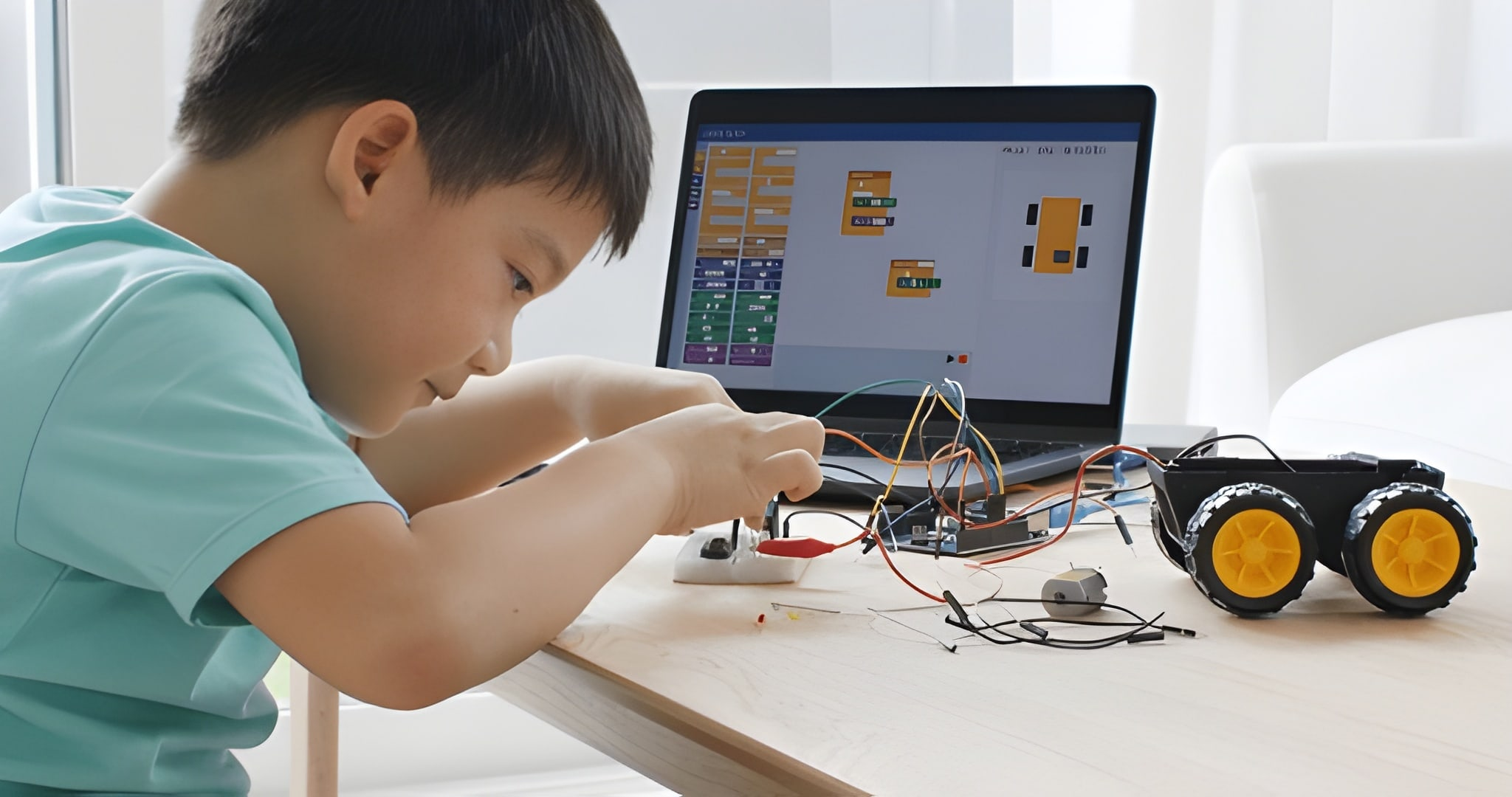
In the digital age, coding is not just a technical ability but also a language of imagination, rationality, and problem-solving. Getting children to code early can help them understand how technology operates, develop better judgment, and promote new thinking. The problem is many parents and teachers do not know how to entertain their children with the notion of coding and what is suitable for their age at the same time. However, this does not imply that to code, one is enslaved to a PC and a complex programming language. In reality, it may be presented as playtime that involves a puzzle. To share code with your youngster smoothly yet entertainingly, consider this guideline to see how you could educate your kid while having fun.

Start by Inspiring Children to Learn More about Coding
Before you open an app or pick up lessons, be sure to explain what coding is right to your child. The trick is, kids must be aware from the outset that code is a structure of instruction. Essentially, code instructs a computer to engage in some activities or provides assistance. Hence, the concept of code does not look so daunting or complicated to them. You might introduce this notion by employing analogies that are simple to understand and do not need a long time to digest. For instance, you could suggest that when we inquire Alexa to play any songs or set an alarm, this would be feasible through a code which someone must create so that she understands what to do. Using familiar events can help your youngsters understand what the code does, helping them become more fascinated in understanding what they need to do.
Turn Coding Concepts into Playful Games
Young children always do well with games and play in general; understanding coding concepts is no exception. The best way to begin would be to create playful games around coding concepts and not use a computer right away. Unplugged coding is a wonderful start that involves teaching logic basics of code without a screen. With simple commands such as forward, backward, turn left, and turn right, one can play ‘coding games.’ For example, you can create a small course with obstacles, and you pretend to be working as a robot while your kid gives you the commands to reach a certain place. Take turns after a few times, and let them do the ‘programming’ for you. It can be a fun activity that lays the foundations of coding knowledge such as sequencing, logic, and problem-solving abilities. If the kid is a bit older, board coding games like Robot Turtles or Code Master can help you understand the fundamentals of programming through fun and challenging experiences.
Use Storytelling to Make Coding Creative
Storytelling can help to introduce the coding lifestyle to children because it makes the logical programming process bright and imaginative. Children love stories, and coding is merely telling an interactive tale through technology. The child can start by creating his own digital adventures, games or even animations with platforms such as scratch or Tynker, where the coding process involves different colored blocks that one drags from one place to another instead of direct programming. For example, they can make a cat dance around, proceed on a space mission or even create their own short fairy-tale game. These platforms offer children immediate visual feedback of what their code does, and one can see the immediate effect that coding has on one’s ideas and projects. Children get emotionally invested in the leanings and feel that their stories and dreams can become a reality.

Introduce Coding Toys and Robots:
The ultimate way to make coding real and exciting for kids is by using coding toys and educational robots. These hands-on tools combine play and technology, allowing kids to realize the impact of their coding on real-world activities. A few popular options include LEGO Mindstorms, Sphero, Botley the Coding Robot, and Dash and Dot. The robots could either respond to children’s codes through apps or instructions through physical input cards. Kids learn the basic loops, logic, and sequencing through manipulating and programming. For the younger age brackets, Cubetto, the Swedish wooden robot, with its screen-less commands through color-coded blocks, is a good option. These toys will allow kids to envision coding and its practical implications while learning fine motor skills, teamwork, and being patience. 5. Start Small, Keep It Simple: Create simple goals when starting. Avoid creating large burdens by introducing kids to complex programming languages. In this case, the ScratchJr and Blockly online fuzzles should be a perfect starting point. Let them drag and color the blocks together to make the chosen character move, jump, or talk, emphasizing the typical core coding processes.
Use Puzzles and Challenges
Tackle Problem-Solving Games are an awesome way to learn how to solve coding problems. Children feel like they play challenging video entertainment, but it is a fun way for them to practice coding. Platforms like Hour of Code provided by Code.org, Lightbot, or Kodable supply enjoyable puzzles in the form of games where kids use coding to move avatars through a maze or complete various causes. This educational approach develops the child’s reasoning and organizational skills. It also encourages a child not to give up when he or she cannot solve the issue right away. If the issue arises, the child learns to experiment, find the proper solution, search for the results and try again. In other words, this is the method that actual programmers engage in to perfect their knowledge. The more they develop through trial and error, the more resilient, innovative, and self-assured they become in the process of addressing problems they have never solved before.

Celebrate Progress and Boost Confidence
Your kid may need time to grasp coding, and it is important to appreciate even the most minimal accomplishments. When your child finishes a project to make the character move, show them what they have done and appreciate their hard work and creativity. By showing their project to your family or placing it in a prominent place, you can increase their desire to continue learning. It is critical not to focus on perfection; instead, focus on the process, curiosity, and creative thinking. A productive outlook boosts self-assurance and encourages children to be more inquisitive and competitive. Coding also teaches kids several techniques that are more useful in life, such as persistence, adjustment, and the ability to make errors. Children who view mistakes as opportunities to learn new skills become more versatile and adept at learning.
Conclusion :
Be a guide, not a teacher. The most important thing about introducing children to coding is the approach. Forget about teaching coding “like math.” Instead, be a guide and a fellow learner. Let your child be in charge as they uncover new things by exploring and discovering independently. If they get stuck, ask guiding questions: “What do you think will happen if you change this part of the code?” Take a course with your child and be curious together. When you are learning something new, it creates a feeling of connection and a deeper interest in the subject. Remember everything I’ve said before. Sometimes you don’t have to be the expert, but coding is about discovering and experimenting. Be patient, communicate with your child about what they discovered, listen to their dreams, and encourage them. Children want to share the results of their work with their parents, so show interest and celebrate their accomplishments. Always remember that coding is not just about mathematics or informatics; it is more of a creative process. Have fun, and your child will follow you.