
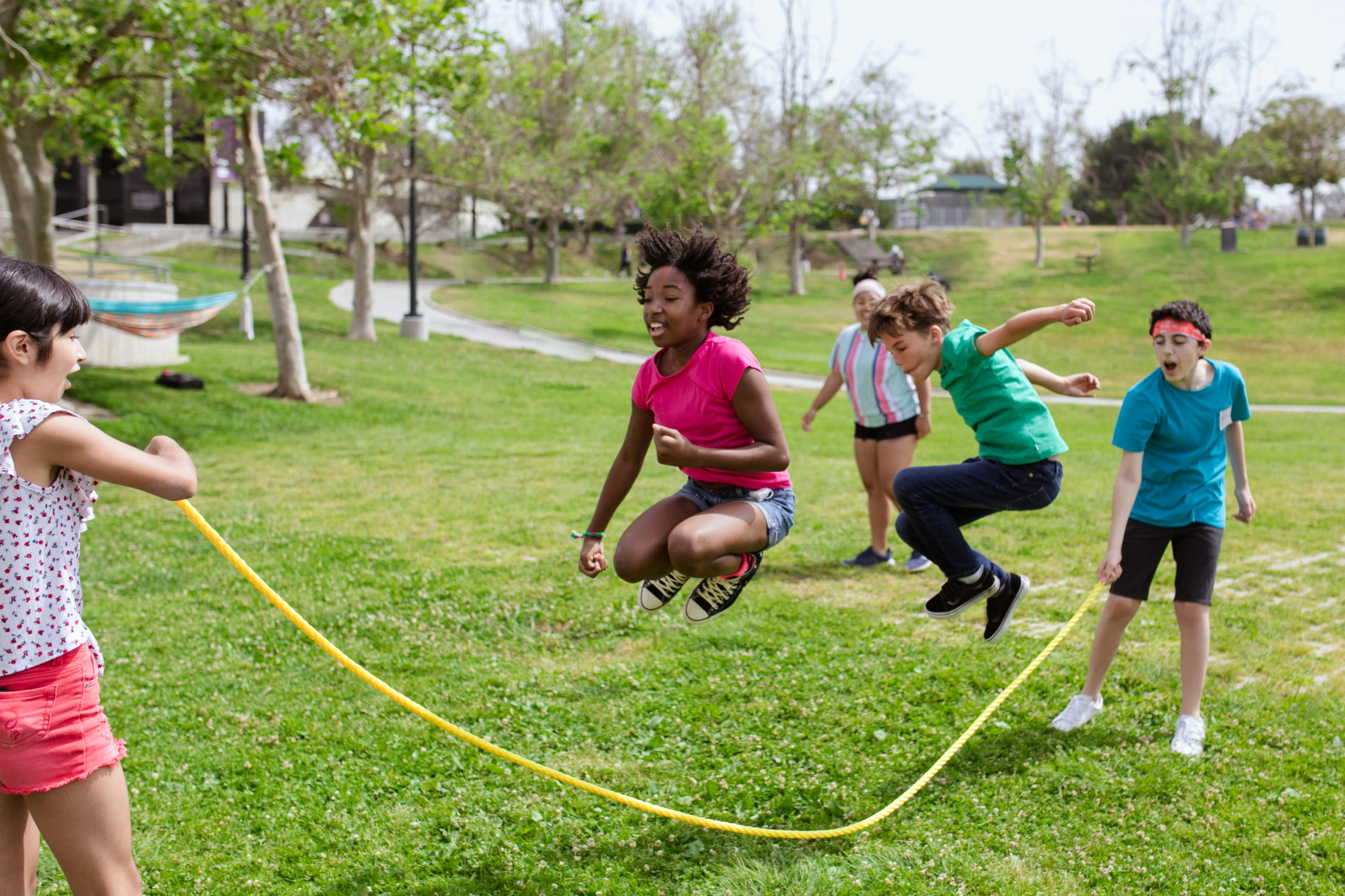
It’s a digital world, and increasingly it’s harder to get kids up and active playing outside. Too many children spend more time with screens than they do outside developing physical skills. However, playing outdoor games is key in developing agility, coordination, speed and overall fitness. These are not just top outdoor games that improve agility and speed in kids for athletes — they are critical to every child’s growth and development.
Children running, jumping and chasing each other also helps to improve reflexes, strengthen muscles and cardiovascular health because it serves as a form of exercise. But the best part? It’s fun. Children learn to navigate new environments while combining athletic skills naturally, without realizing that they are exercising. Here, we take a look at some of the best outdoor games to encourage kids to work on their agility and speed while having a lot of fun.

Tag –The Wholesome Game of Simple Reasoning and Quick Reflexes.
Tag is one of the easiest, but best outdoor games for agility. Whether it is classic, freeze or shadow tag, this game forces constant movement and sudden changes in direction. Kids have to sprint, stop short, dodge other players and make quick reactions — all of which improve explosive speed and sharp coordination.
Beyond the health benefits, tag teaches children spatial awareness and decision-making. They have to predict where the “it” player will go, and plan their escape trajectory, in seconds. It’s easy to play, there are a million variations on the theme. And it’s a great way for kids of all ages to work on their agility with minimal set-up.
Get competitive with some relay races – great for speed and team spirit!
Relay races enable you to combine speed with strategy while promoting teamwork and friendly competition. Children running with batons, balls and sacks Children are developing lower body strength. As well as coordination whether they are running with batons or carrying balls or hopping in sacks. Children run short lengths of the track at a much faster pace. Yet run coordinated to perform baton handoffs or navigate an obstacle.
Relay races can be organized by parents and teachers in backyards, parks or playgrounds. Introducing elements — such as zigzag sprints, crawling sections or jumping challenges — can turn the game into a dynamic one. Relay races don’t just help kids develop speed, they teach teamwork, communication and sportsmanship.
Obstacle Courses – Training the Body In Its Entirety
There is nothing to kick-start agility like an obstacle course designed well. In an obstacle course, kids have to crawl and jump and balance, climb and sprint — all in one shot. They develop both physical and mental flexibility, as kids must respond to each challenge immediately. Adjusting their movements without missing a beat.
Parents can also just create obstacle courses at home or in the park using household items or play equipment. Cones, ropes, hula hoops and even cardboard boxes can all be turned into inspiration for creative challenges. For instance, the kids may have to jump through hoops, crawl under ropes and dash around cones. These movements are diverse and help develop full-body coordination, fast reflexes. And muscular endurance which are key elements of athletic agility.

Jump Rope To Improve Footwork And Coordination
Jumping rope is more than a playground pastime — it’s also highly efficient exercise that improves footwork, challenges rhythm and enhances cardiovascular health. The jumps are a matter of timing and coordination between the feet, hands and eyes. As kids improve at jump rope, they learn to move faster and with more control.
Add variety and fun to your workout with speed jumping, double unders and jumping together in groups. The fast alternate-paced stepping makes you feel light on your feet. And for the brains of those who are multi-taskers, there is both rhythm and coordination that is had with doing this routine. Jump rope is particularly good for kids who play sports such as soccer, basketball or tennis that require quick feet and endurance.
Capture the Flag-Strategy and Speed of Building
Speed, strategy and team work all come into play in this challenging game that is definitely one of the best outdoor games for developing your student athlete. Players have to run, stop and turn quickly, and dodge rivals while attempting to take the opposition’s flag. It’s a game that demands rapid reflexes and shrewd decision making. As kids have to determine whether to run, hide or defend their territory.
Because the game features bursts of sprinting as well as moments for strategy or defense, it helps develop anaerobic and aerobic endurance. Children accrue agility while also picking up teamwork, communication and problem-solving — skills that reach well beyond the playing field.
Hopscotch – Flair for Co-ordination and Balance in the Younger Ones
Sure, hopscotch is basic and easy on the surface, but it’s a beneficial game in that it can improve balance, coordination and leg strength for younger children. The exercises, which involve hopping and jumping, help enhance the control of the muscles around the core. Every square demands a change in weight and balance, so children have to get quick on their feet as they work through the pattern.
Not to mention that hopscotch also promotes counting and memorization, since kids must remember the sequence of numbers as well as which big kid rules can be broken. It’s a sport that requires mental focus and physical agility, so it’s great for young toddlers to grade school children.
Shuttle Runs – The Bread And Butter Of Speed Training
Shuttle runs are an all-time stand by for a coach and they will help build speed as well as conditioning. A basic exercise that includes running to and fro two points hurriedly. The constant speeding up and slowing down of the game trains players’ muscles to react quickly, and enhances both top-end speed and agility in a straight line.
Parents can space cones or markers ten to twenty meters apart and have kids run between them in timed intervals. As kids grow, they get quicker reactions, more powerful legs and improved cardiovascular endurance. Shuttle runs simulate the type of rapid direction change that is required in sports such as soccer, basketball and hockey.
Sack Races – Power and Precision on the Run
They may not be the coolest of races, but these sack sprints are a good way to work your lower body power and coordination. Jumping around in a sack of course requires children to use their leg and core muscles while balancing. The movement being limited up they have to try and boogie on down.
And this game will also help you build the sort of explosiveness that comes with sprinting and jumping. Sack races are a great outdoor activity and should be played on an open area with soft ground for the safety of players. They can be played solo or in teams and provide both laughter and education for kids of all ages, which is why they’re great way of family get-togethers as well as classroom activities.

Conclusion: The Making of Strong, Agile and Happy Kids
It turns out that one of the most basic ways to gain agility and speed as a child is also the best: outdoor play. Games such as tag, relay races and obstacle courses do more than improve physical abilities; they also help to teach kids important life skills such as teamwork, focus and perseverance.
In an era where kids are juggling more digital distractions each day, guiding them to rediscover the simple joys of outdoor play is one of the most valuable gifts a parent can give. These games are not only training for the body, they produce resilient, self-assured and joyful children who feel prepared to tackle any challenge — both on and off the field.